










Key takeaways
- NST is a fully residential program — students live on campus across all four years.
- Campuses offer modern infrastructure: advanced labs (including robotics and VR), libraries, maker spaces, and innovation hubs.
- Every student is equipped with a MacBook.
- Campus life includes tech-cultural fests — Tekron (Pune) and Neutron (Delhi) — plus sports and wellness facilities.
- Hostel and mess facilities are built in, with fees that vary by campus.
Why NST is fully residential
NST's residential model is a deliberate choice, not a logistical default. Living on campus creates an immersive environment where collaboration, late-night project sessions, peer learning, and community building happen naturally. For a build-first program where students code from day one and work on real projects, being surrounded by equally ambitious peers is part of the curriculum's hidden engine. It's also why the model appeals to a pan-India applicant base — students from metros and Tier-2/3 towns alike relocate to be part of it.
The campuses
NST operates on the campuses of its partner universities, each with its own character:
- Rishihood University — Delhi NCR / Sonipat
- Ajeenkya DY Patil University — Pune
- S-VYASA University — Bengaluru
- St. Mary's University — Hyderabad
The Sonipat campus (within Rishihood University), for example, is designed to combine academic rigour with leadership, innovation, and community engagement. Students there have access to state-of-the-art classrooms and advanced laboratories — including robotics and VR labs — a well-stocked library with extensive technology resources, and maker spaces and innovation hubs for prototypes, hackathons, and live projects. Recreational and wellness facilities such as sports grounds (and, at some campuses, a swimming pool) round out a balanced campus experience.
Hostel and mess: the essentials
NST campuses provide dedicated hostel and mess facilities, so students have a hassle-free place to stay and regular meals. A few practical points to know:
- Accommodation is on-campus and residential, with air-conditioned hostels reported at some campuses.
- Mess facilities offer regular meals, with vegetarian options available; some campuses also have multiple food outlets.
- Hostel and mess fees vary by campus and are typically charged alongside (and sometimes separately from) tuition. As an indicator, hostel and mess charges at the Rishihood campus have been reported at around ₹7.2 lakh across four years; other campuses differ. Some campuses adjust hostel/mess fees annually for inflation, and small charges like electricity may apply per semester.
Because the exact figures and amenities differ by location, it's always worth confirming the specifics for your chosen campus directly with NST.
Life beyond the classroom
A residential tech campus isn't all code. NST's student life includes a vibrant mix of events and activities:
- Tech-cultural fests: Tekron in Pune and Neutron in Delhi bring together technology and culture in large student-run celebrations.
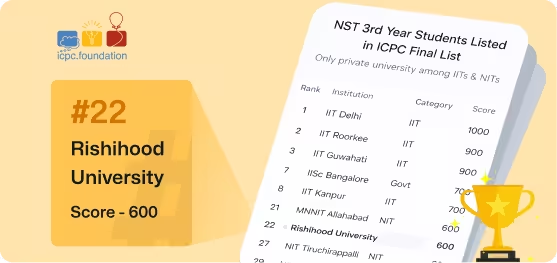
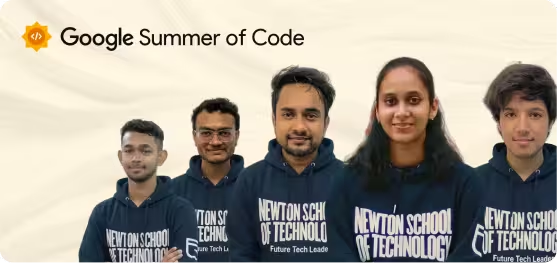
- Competitive programming and hackathons: a strong culture around ICPC, Google Summer of Code, and round-the-clock build challenges.
- Clubs and communities: student-led groups where peers with shared interests collaborate and push each other.
- Sports and wellness: indoor and outdoor sports facilities, with students competing at high levels — including, in one notable case, an NST student earning a Top-5 global rank in Taekwondo.
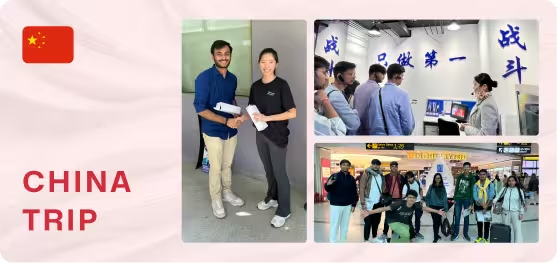
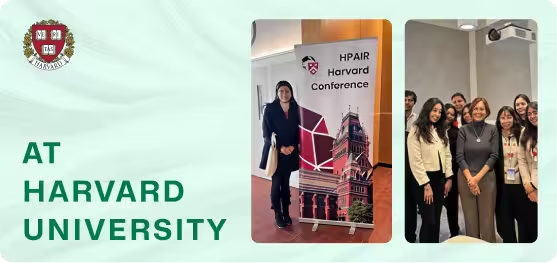
- Global immersion: funded trips to tech hubs such as China, the USA, Singapore, Thailand, and Germany expand horizons well beyond campus.
The "before and after" of campus life
Many NST students describe a clear shift. They arrive loving technology but unsure how to turn that interest into a career, with most prior learning feeling theoretical. After immersing in campus life — building real projects, learning alongside ambitious peers, and getting hands-on mentorship — they describe gaining the confidence to solve practical problems like an engineer. The residential, community-driven environment is a big part of why that transformation happens.
Frequently asked questions
Is NST fully residential? Yes. NST is a fully residential program; students live on campus throughout the four years to enable an immersive, collaborative learning environment.
What facilities do NST hostels and campuses have? Campuses offer hostel and mess facilities, advanced labs (including robotics and VR), libraries, maker spaces, innovation hubs, and sports and wellness facilities, with a MacBook provided to every student.
How much are NST hostel and mess fees? Hostel and mess fees vary by campus. They are typically charged alongside the program fee; confirm the exact figure for your chosen campus directly with NST.
What fests and events happen at NST? NST hosts tech-cultural fests — Tekron in Pune and Neutron in Delhi — plus hackathons, competitive-programming events, clubs, and sports activities.
Are meals available for vegetarians? Yes. NST mess facilities provide regular meals with vegetarian options available, and some campuses have additional food outlets.
The bottom line
NST's campus life is engineered to match its build-first philosophy: immersive, collaborative, and busy, with modern labs and a strong community to match the academic intensity. For students ready to relocate and dive into an ambitious environment, the residential experience is one of the most distinctive parts of the program.
Hostel facilities, fees and amenities vary by campus and may change each year. Confirm details for your chosen campus on the official NST website. Last updated: June 2026.