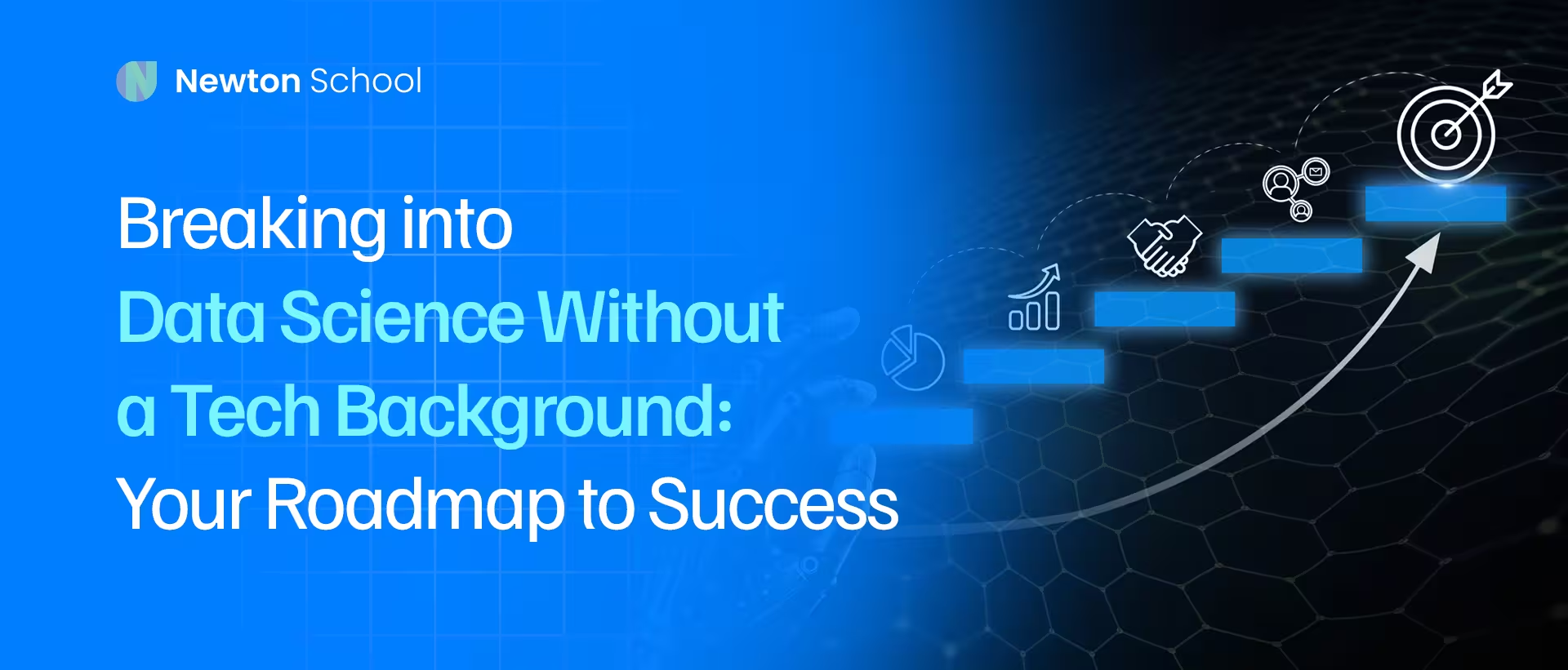
Breaking into Data Science Without a Tech Background: Your Roadmap to Success
Think you need to be a coding wizard to work in Data Science? Think again.
Data science is one of today’s fastest-growing and most impactful career paths. But many aspiring professionals hold back, thinking they need a degree in Computer Science or years of technical training.
The truth? You don’t need a tech-heavy background to break into this field. In fact, many successful Data Scientists started in Economics, Psychology, Business, Biology, or even the Arts.
This guide will show you exactly how to transition into Data Science without a traditional tech background and why your unique experience might just be your biggest strength.
1. Leverage the Skills You Already Have
Data science is about solving real problems using Data, not just writing code.
If you’ve worked in any field involving analysis, decision-making, or structured thinking, you likely already have core skills that transfer well into data science.
Critical thinking: Whether from Finance, Education, or Healthcare, your analytical mindset is a powerful foundation.
Statistics: Even a basic grasp of probability or averages helps you understand data trends and distributions.
Business acumen: Knowing how to tie insights to real-world impact is just as valuable as modelling the data itself.
Stat: 41% of Data Science professionals come from non-technical fields (Data Science Central, 2023).
2. Learn the Right Tools (Gradually!)
You don’t have to master everything at once. Focus on the essentials and build your skills step by step:
Python or R: These are the most widely used programming languages in Data Science. Start with beginner tutorials.
Statistics & probability: Concepts like correlation, regression, and distributions are core to Data Analysis.
Data visualisation: Tools like Tableau, Power BI, or Python libraries like Matplotlib and Seaborn bring your insights to life.
Machine learning (later): Once you’re confident with the basics, dive into ML fundamentals to understand how predictive models work.
Stat: 61% of Data Science job postings list Python as a required skill (Burtch Works, 2023).
3. Get Your Hands Dirty with Real Projects
Learning is one thing. Applying it is where the magic happens.
Kaggle: Compete or practice on real datasets and see how others approach the same problems.
Internships & entry-level roles: Even non-tech companies need data support. Look for Analyst roles or reporting-based work.
Freelance gigs: Use platforms publicly available to work on real business problems and start building a public track record.
Stat: 37% of working Data Scientists have less than 5 years of experience (O’Reilly Salary Report, 2023).
4. Build a Portfolio That Speaks for You
Your portfolio is your proof of skill. It shows employers what you can actually do.
Include:
Kaggle projects with thoughtful analysis
Personal passion projects that reflect your domain interests
A GitHub profile with clean, commented code and Jupyter notebooks
Stat: 70% of Data Scientists maintain a GitHub portfolio and those who do are 50% more likely to land interviews (LinkedIn, 2022).
Still unsure where to begin?
Hear directly from Newton School graduates who started from scratch and now work in companies like Meesho, Flipkart, and Razorpay.
Watch their stories here
Network and Learn from the Community
Breaking into Data Science is much easier when you’re not doing it alone.
- Join LinkedIn communities, Reddit threads (like r/datascience), and Stack Overflow.
- Attend local or virtual meetups, hackathons, and webinars.
- Find a mentor who’s a few steps ahead in their career and learn from their journey.
One of the best ways to assess where you stand and what skills you might be missing is by attending a masterclass or workshop. These sessions are often short, focused, and designed to give you clarity about your current understanding, while introducing you to practical tools and techniques used in the industry.
Many learners find them especially useful for:
Validating their skill level
Learning directly from industry professionals
Gaining confidence through structured, hands-on tasks
(Insert image or review from a recent workshop here)
Stat: 68% of Data Scientists say networking directly helped them land a job or get career advice (TechRepublic, 2023).
6. Be Prepared for the Long-Term Journey
You don’t need to rush. Most Data Scientists learn and grow continuously throughout their careers. Be patient, be curious, and keep solving problems.
Stat: The median salary for a Data Scientist in 2023 is $96,000, with top earners making $130,000+ (Glassdoor).
Your Background Is Not a Barrier. It’s Your Edge.
What you bring from your previous experiences, whether that’s business insight, communication skills, or deep domain knowledge, gives you a unique perspective that can make your work as a Data Scientist even more impactful.
At Newton School, we help learners from all backgrounds become industry-ready through project-based learning, expert mentorship, and career-focused programs.
Start learning. Start building. Start showing your value, tech background or not.
_converted.avif)