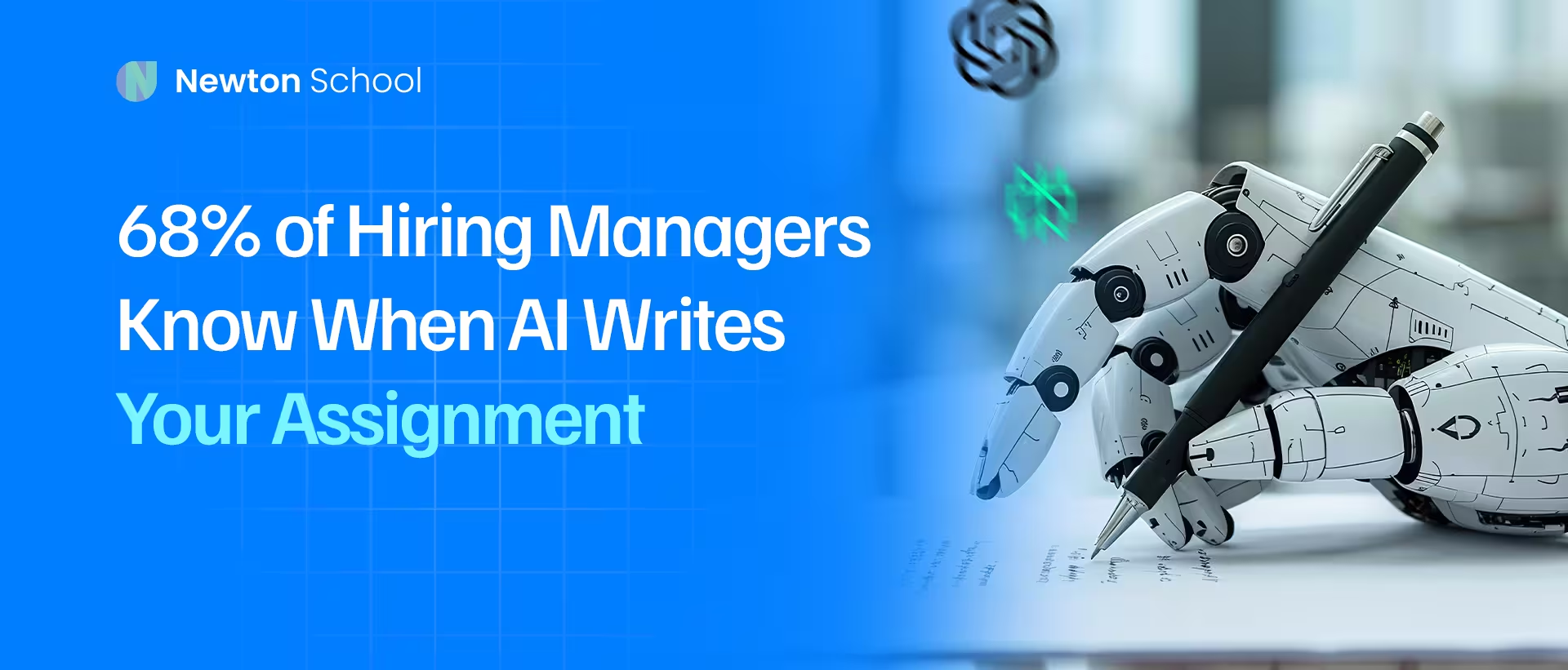
68% of Hiring Managers Know When AI Writes Your Assignment
You heard that right! In fact, more than half of the respondents said they would reject a candidate if they thought AI had done most of the work.
Think about how often students and professionals rely on AI for assignments, projects, and even interview preparation. You can ask it to explain a tricky SQL query in seconds, debug your Python code without breaking a sweat, or brainstorm five creative project ideas before you finish your coffee.
It starts innocently. First, you use AI to clarify a concept. Then you rely on it to draft a section of your assignment. Soon it is generating full project reports while you simply tweak the formatting. You’re still producing work, but how much of it truly reflects your understanding? AI might be making your work look better, but it could also be quietly making you look worse.
The real problem is that the more it thinks for you, the less you learn to think for yourself.
AI has moved from novelty to necessity for students, and recruiters are paying attention. Their issue is not with AI itself, but with candidates who cannot explain their own work. A polished portfolio is meaningless if the person behind it cannot walk through the reasoning, decisions, and problem‑solving process.
The smartest people treat AI as a co‑pilot, not an autopilot. Co‑pilots can help you navigate, suggest alternative routes, and alert you to potential issues, but you always remain in control. Those who use AI effectively turn it into a thinking partner – asking it to code, challenge their assumptions, or present alternative approaches. This not only deepens learning but also builds the clarity and communication skills needed for real-world interviews, where explaining your thought process matters as much as technical accuracy.
So where do you draw the line?
By using AI to refine your thinking instead of replacing it.
Here are some effective AI prompts to help you prep better for interviews:
“Explain recursion in Python with a cricket analogy and give me a short practice problem.”
“Review my SQL query for performance issues and explain why your suggestions improve it.”
“Suggest three creative ML use cases in Indian retail, outlining potential benefits and challenges.”
Tip of the Day: Before asking AI for help, spend at least 3 minutes solving the problem yourself. Then use AI to challenge and expand your approach, and finally re‑explain the solution in your own words.
These are not shortcuts, but conversation starters that allow you to understand concepts in a way that’s relatable to you, and help you form your own thoughts rather than copying them.
By using AI with intention rather than dependency, you’re not just learning faster. You’re building the kind of skillset no algorithm can replace.
.avif)

.avif)